How to Submit Your Website to Search Engines (Beginner’s Guide)

How to Submit Your Website to Search Engines (Beginner’s Guide)

Recently, one of our readers asked us how to submit their WordPress site to search engines like Google?

Search engines are the largest source of traffic for most websites. That’s why it is important to ensure that they can easily find and rank your website pages.

In this article, we’ll show you how to easily submit your website to search engines and start getting traffic to your site.

Submitting your website to search engines

Since this is a comprehensive guide, please feel free to use the quick links below to jump straight to different sections in this article.

  • Do You Need to Submit Your Website to Search Engines?
  • How to Submit Your Website to Google
  • Creating a WordPress Sitemap with All in One SEO
  • How to Submit Your Website to Bing, Yahoo, and DuckDuckGo
  • How to Check if Your Website Has Been Indexed
  • Should You Use a Website Submission Service?
  • Troubleshooting and FAQs about Submitting Your Website to Search Engines

Do You Need to Submit Your Website to Search Engines?

No, you do not have to submit your website to search engines. Most search engine bots can automatically find your website if it has been mentioned on other sites.

However for WordPress websites, we recommend submitting it manually because it will help you get discovered faster.

Why you should submit your website to search engines?

If you are just starting a new business or a blog, then search engines are the most important source of free website traffic. This means you can grow your business online without a lot of money.

Unlike paid traffic from ads, organic search traffic is free, and you don’t need to pay search engines for that.

More importantly, the submission process is quite simple, free, and gives you access to several tools that will help you grow your business later on.

That being said, let’s take a look at how to submit your WordPress website to search engines.

Submitting Your Website to Google

Google is the largest and most popular search engine on the planet. For most websites, Google is often the biggest source of their traffic.

To submit your website to Google, you need to sign up for Google Search Console. It is a free tool offered by Google to help website owners see how their website is performing in search results.

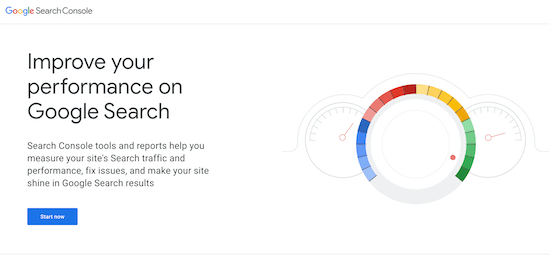
Signing up is free and easy. Simply go to the Google Search Console website and click on the ‘Start now’ button.

You can use your existing Google account to sign in or create a new account.

Next, Google will prompt you to enter your website domain name. We recommend using the URL prefix option here as it’s easier to verify.
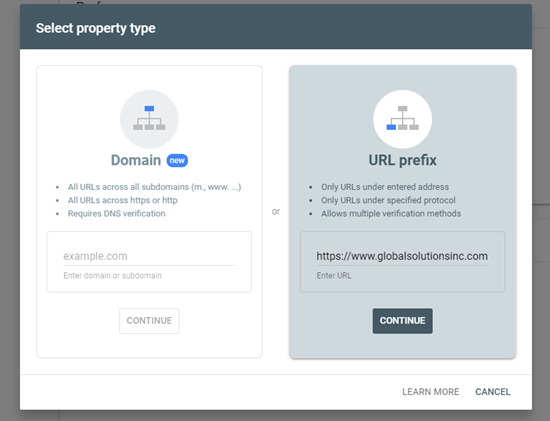
Using the URL prefix method to add your site to Google Search Console

After choosing this option, use the HTML tag method to verify your website and submit it to Google. You simply need to click on the HTML tag option to expand it, and then copy the code by clicking the ‘Copy’ button.
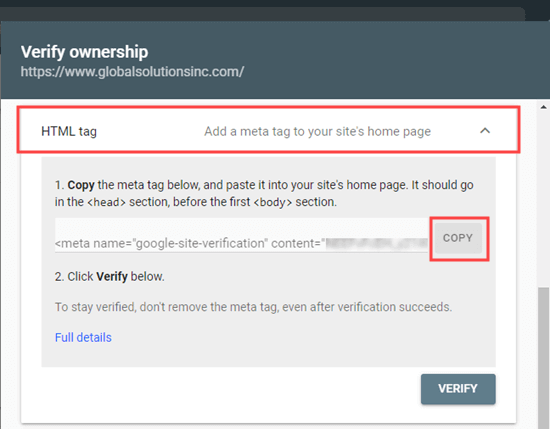
Copying the HTML meta tag from Google Search Console

Now there are multiple ways to do add this code to your website. We will show you the two easiest methods, and you can choose one that best suits you.

1. Adding Verification Code in WordPress using All in One SEO

The easiest way to do this is using All in One SEO, which is the best WordPress SEO plugin on the market. It allows you to optimize your website for search engines without learning any SEO jargon.

First, you need to install and activate the All in One SEO plugin. For more details, see our step by step guide on how to install a WordPress plugin.

Next, you need to visit the All in One SEO » General Settings » Webmaster Tools page and click on the Google Search Console option.
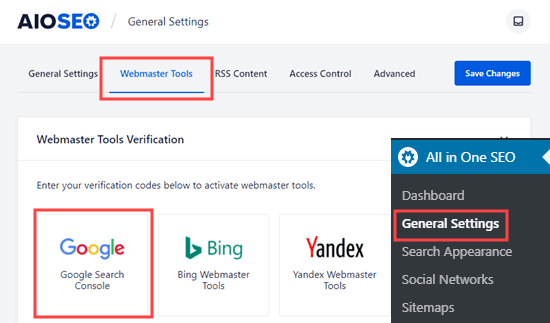
The Webmaster Tools page in All in One SEO, to select Google Search Console

After that, you need to paste the content value from your HTML meta tag into the ‘Google Verification Code’ box. The part you want is the long string of numbers and letters.

Don’t forget to click the ‘Save Changes’ button at the top of the screen.
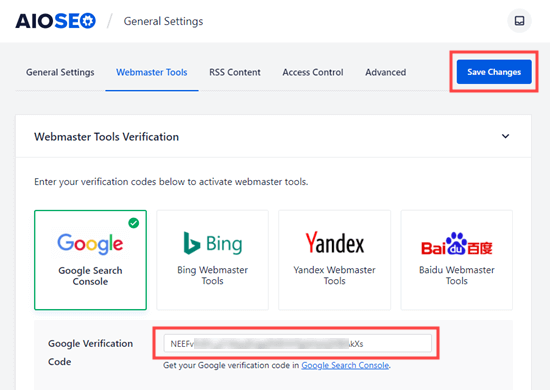
Entering your Google verification code (from the HTML meta tag) into All in One SEO

2. Adding Verification Code in WordPress using Insert Headers and Footers

If you are not using the All in One SEO plugin, then you can use this method to add Google Search Console verification code to your WordPress site.

First, you need to install and activate the Insert Header and Footers plugin. For more details, see our step by step guide on how to install a WordPress plugin.

Upon activation, go to the Settings » Insert Headers and Footers page in your WordPress admin. Then, simply paste the whole HTML meta tag into the ‘Scripts in Header’ box.
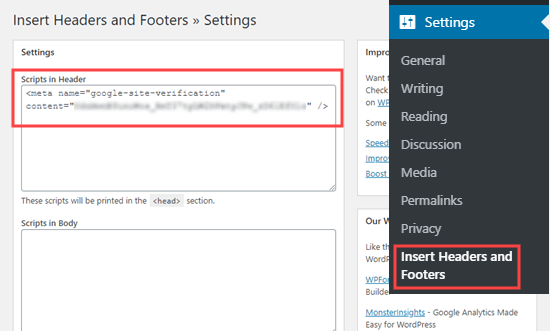
Pasting the Google meta tag into the Insert Headers and Footers header box

Then, make sure you click the Save button at the bottom of the page.

After adding the meta tag to your site through either method, go back to Google Search Console and click the ‘Verify’ button for the HTML tag method.

You should now see a success message in Google Search Console to let you know that your site has been verified.

If you need more help, check out our step by step guide on adding your WordPress site to Google Search Console.

Creating an XML Sitemap with All in One SEO

An XML sitemap in WordPress is a list of all the content on your website, including all your posts and pages. It helps search engine bots discover your content faster and start showing it in search results.

In the WordPress 5.5 update, XML sitemaps were added as a built-in feature. However, these sitemaps are very basic and can’t be easily customized.

We recommend using All in One SEO to create your sitemap.

All in One SEO is the complete WordPress SEO toolkit and includes a comprehensive sitemaps generator.

It allows you to customize your XML sitemaps by excluding unnecessary or duplicate content. They also have powerful custom sitemap for WooCommerce, news sitemap, and video sitemaps. This gives you a bonus advantage in SEO as your business grows.

First, you need to install and activate the All in One SEO plugin. For more details, see our step by step guide on how to install a WordPress plugin.

Upon activation, All in One SEO will automatically create your sitemap.

To view it, simply go to the All in One SEO » Sitemaps page in your WordPress admin. Then, click the ‘Open Sitemap’ button.
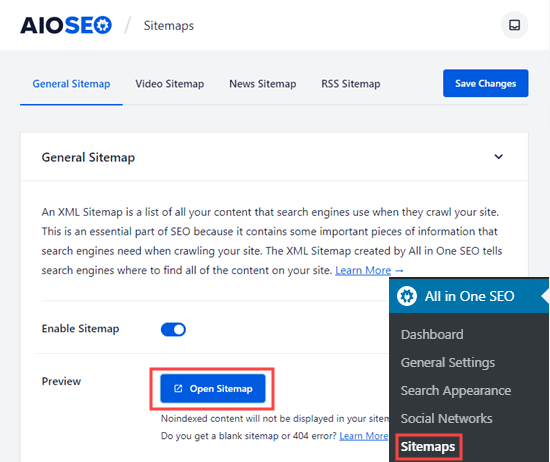
Click the button to open your sitemap, which has been automatically generated by All in One SEO

You will then see the sitemap index for your site. This links to all the sitemaps that All in One SEO has created.
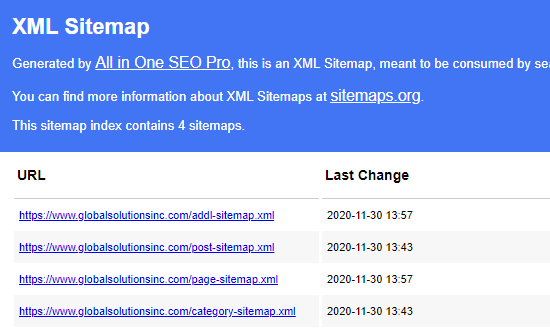
The index of sitemaps in All in One SEO

Note: All in One SEO creates multiple sitemaps because it is best practice to split up large sitemaps. By using different sitemaps for different types of content, your sitemaps will load quickly and be a manageable size even as your website grows.

Please keep this page open or save the page URL as you will need it later in the tutorial.

If you want, you can click on any of the links to see the content listed in each individual sitemap. Here is the sitemap for the pages on our demo website.
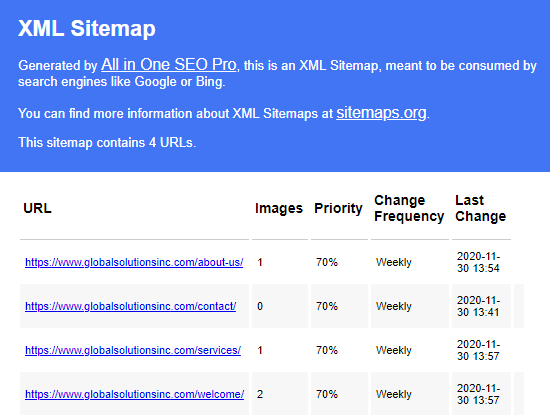
The list of pages in the All in One SEO pages sitemap

Add your XML Sitemap to Google Search Console

Now that you have generated your XML sitemap, the next step is to help Google discover it quickly.

The easiest way to do that is by using the Google Search Console.

Simply login to your Google Search Console account, and then click on the Sitemaps link in the left-hand toolbar:
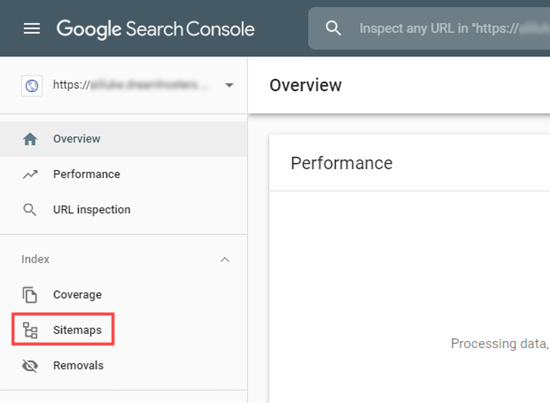
The Sitemaps tab in Google Search Console

Google Search Console has already put your website domain here. All you need to do is to type sitemap.xml into the box and click the Submit button.
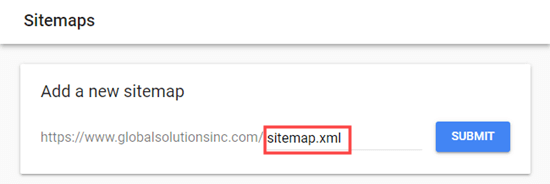
Entering your sitemap URL into Google Search Console

Search Console should show you a message to let you know the sitemap has been successfully submitted. You will also see your website sitemap in the ‘Submitted sitemaps’ list.
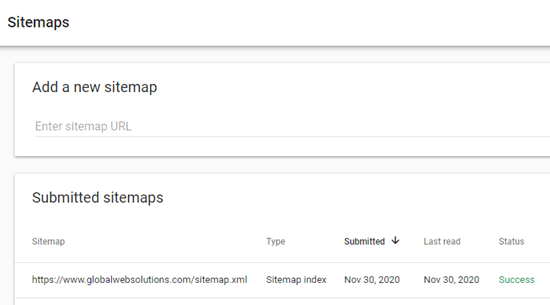
Your sitemap should appear in the table after you submit it to Google Search Console

How to Submit Your Website to Bing, Yahoo, and DuckDuckGo

Google totally dominates the search engine market with a whopping 92% market share. However, other search engines like Bing, Yahoo, and DuckDuckGo can still be a significant source of traffic for your website.

Submitting Your Website to Bing, Yahoo, and DuckDuckGo

To submit your website to Bing, you need to sign up for Bing Webmaster Tools.

Just click the Sign In button to get started. Then, sign in using your Microsoft, Google, or Facebook account.

Next, Bing will prompt you to add your site. We recommend using the ‘Add your site manually’ option. It works reliably and doesn’t require you to have verified your site with Google Search Console.

After that, simply enter your website’s domain name (URL) then click the ‘Add’ button.
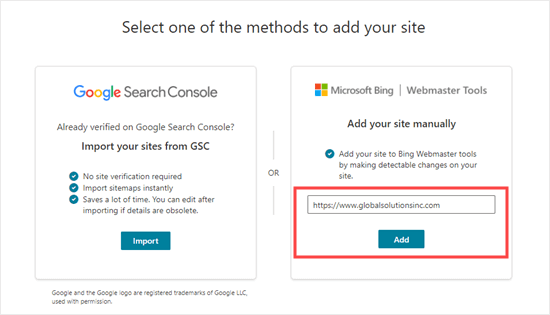
Adding your site manually to Bing Webmaster Tools

Next, you will see some verification method options. First, click on the HTML Meta Tag method. This will open up the details. Then, click the ‘Copy’ button to copy the meta tag.
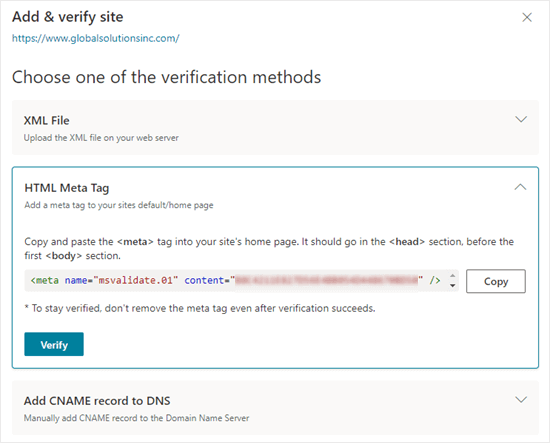
Getting the HTML meta tag from Bing Search Console

The easiest way to add the meta tag to your site is to use All in One SEO. In your WordPress dashboard, go to All in One SEO » General Settings » Webmaster Tools page.

Then, click on the Bing Webmaster Tools option.
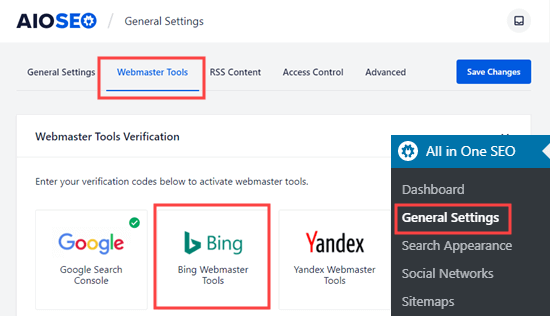
Selecting the Bing Webmaster Tools option on the All in One SEO Webmaster Tools page

This will open up the box where you can enter the Bing verification code. This is the long string of numbers and letters that forms the content value in the Bing meta tag.
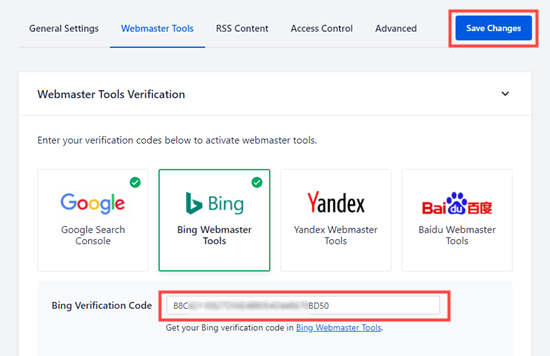
Entering the Bing verification code from your Bing HTML meta tag

Alternatively, you can install the free Insert Header and Footers plugin for WordPress.

Upon activation, go to the Settings » Insert Headers and Footers page in your WordPress admin. Then, simply paste the whole HTML meta tag into the ‘Scripts in Header’ box.
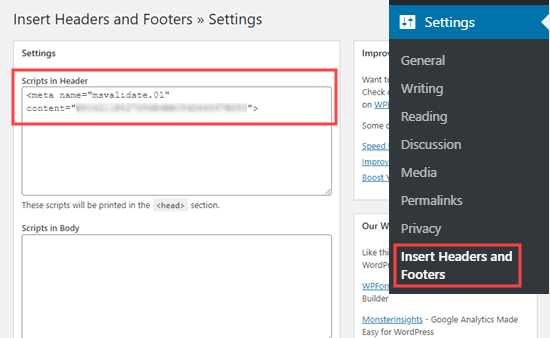
Copying the Bing meta tag into the Header section of the Insert Headers and Footers plugin

Don’t forget to click the ‘Save’ button further down the page.

After that, you need to return to Bing Webmaster Tools and click the Verify button. You should see a success message to let you know your site has been added.

Next, click on the Sitemaps tab on the left-hand sidebar. Then, click the ‘Submit sitemap’ button.
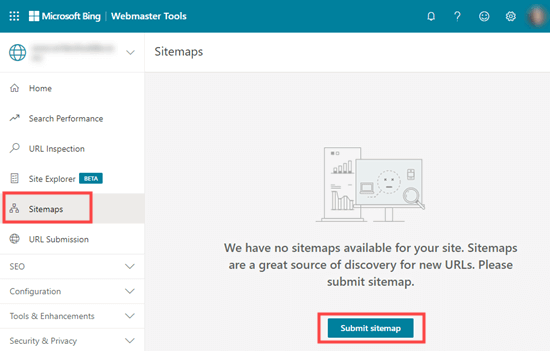
Submitting your sitemap to Bing Search Console

You need to paste in the URL of the sitemap index that All in One SEO created for you. This should be your domain name with sitemap.xml at the end.

After that, just click the ‘Submit’ button.
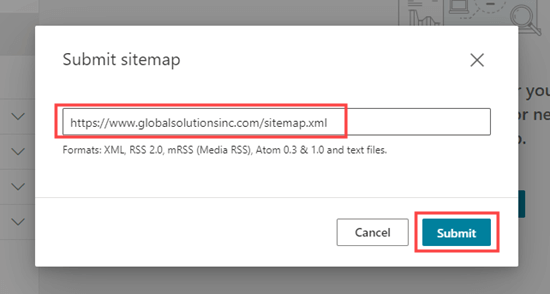
Entering your sitemap URL for Bing

You will now see your sitemap in the sitemap table in Bing Webmaster Tools.
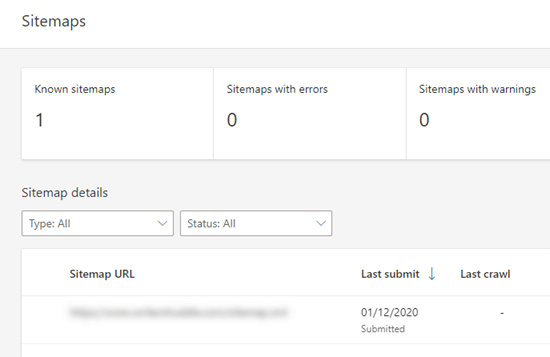
The table of sitemaps in Bing

Your Site Will Also Appear in Yahoo and DuckDuckGo’s Search Results

Now that you have submitted your website to Bing, it has also been automatically submitted to Yahoo.

DuckDuckGo also uses Bing’s search results. This means that by submitting your website to Bing, you will also get it indexed on DuckDuckGo as well.

How to Check if Your Website Has Been Indexed

The easiest way to check whether your website has been indexed is to simply go to your chosen search engine’s homepage and type in site:yoursitename.com as the search term.

For WPBeginner website, we would type site:wpbeginner.com into the search engine.

If your site has been indexed, then you should see a list of your content. Your homepage will normally be at the top.
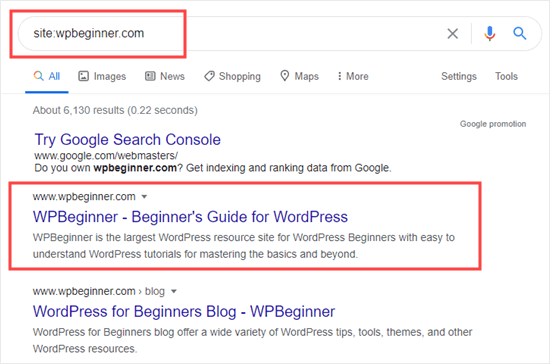
Google results showing that the WPBeginner site has been indexed

This works for all popular search engines, including Google, Yahoo, Bing, and DuckDuckGo.

Should You Use a Website Submission Service?

No, you should not use a website submission service to submit your WordPress blog or website to search engines.

There is no additional benefit to using a website submission or search engine submission services. They charge you a premium fee to do something that is free, and you can do it yourself.

More importantly, these submission services may submit your website to spammy sources which may harm your website’s SEO.

Troubleshooting and FAQs about Submitting Your Website to Search Engines

Since WPBeginner is the largest free WordPress resource site, we have heard just about every question related to this topic. Here are some common problems and FAQs we hear about submitting your site to search engines.

1. How long will it take for my site to appear in search engines?

It could take several days or several weeks for your website to appear in search engines.

It is up to search engines to index your site. You cannot force Google or any search engine to index your site faster.

However, you should follow our instructions above to help search engines find your site as easily as possible. Getting plenty of backlinks to your site can also help speed up the process.

2. I submitted my website but it isn’t showing up in search engines?

First, check that your site is visible to search engines. In your WordPress admin, go to the Settings » Reading page and make sure that the box ‘Discourage search engines from indexing this site’ is not checked.
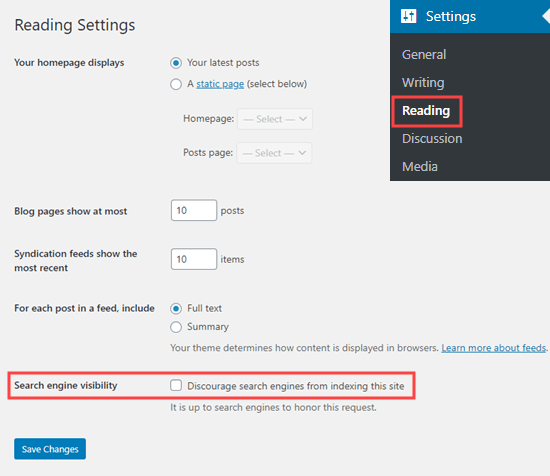
Make sure the box to discourage search engines is not checked in the Reading settings

If the box is checked, then it is stopping search engines from crawling your WordPress site. Simply uncheck it then click the ‘Save Changes’ button.


HOW TO CHECK WEBSITE TRAFFIC FOR ANY SITE (7 BEST TOOLS)  How to Check Website Traffic for Any Site (7 Best Tools)

HOW TO CHECK WEBSITE TRAFFIC FOR ANY SITE (7 BEST TOOLS) How to Check Website Traffic for Any Site (7 Best Tools)

Do you want to check website traffic for any site, including your own?

Checking website traffic allows you to see how well your site performs and how it compares to your competition.

In this article, we’ll show you how to check website traffic for any website using various online tools.

How to check website traffic for any site (7 tools)

Why Should You Check Your Website Traffic?

By checking your website stats, you can easily see how your website is performing.

Your website traffic data will show you where your traffic is coming from, how visitors engage with your site, and what digital marketing strategies are working.

If you want to get more email subscribers, more sales for your online store, or just more traffic overall, then you need to regularly check your website analytics.

By tracking your site’s traffic, you’ll know where your site currently stands and what you can do to improve.

Why Should You Check Your Competitor’s Website Traffic?

Analyzing your competitor’s website traffic statistics can reveal a lot of helpful information such as:

  • The pages and posts bringing your competitors the most traffic
  • Which keywords your competitors are ranking for
  • The channels that are driving them the most traffic

All of this information can be used to improve your content marketing strategy, link building, keyword research process, and more.

By understanding what brings your competition the most traffic, you’ll be able to target those same keywords and topics to generate more traffic for your website.

Best Tools to Check Any Website Traffic (including Competitors)

There are a lot of free and paid traffic checking tools that you can use. Each one has unique features that set them apart.

Most experts use multiple tools to check website traffic estimates for their competitors. We always recommend readers to try at least two different tools to analyze web traffic stats.

By using various tools, you’ll be able to fill in the gaps and get more accurate traffic stats for any website.

As your WordPress site and budget grow, you can invest in multiple tools to gain more insights and dominate your market.

Having said that, let’s take a look at the best tools to check how much traffic a website gets.

1. SEMRush

SEMRush

SEMRush is an all-in-one traffic analysis and competition research tool. It’s the best tool for analyzing and monitoring traffic for any website.

We use this tool at WPBeginner for keyword research, tracking keyword rankings, and a lot more.

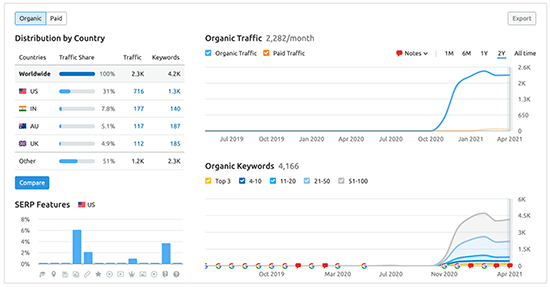
Once you enter a competitor URL, you’ll get a detailed breakdown of your competitor’s total traffic.

You’ll be able to see important website metrics like the volume of monthly traffic over time, traffic distribution by country, the keywords that bring them the most traffic, and more.

SEMRush Domain Overview Stats

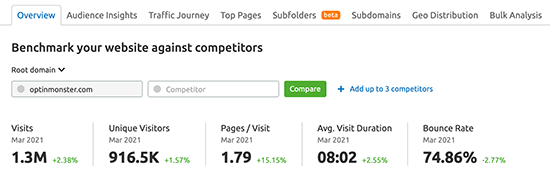
The Traffic Analytics tab gives you the number of unique visitors, total visits, average visit duration, number of pageviews, and the bounce rate the site receives.

This feature is like looking into your competitor’s Google Analytics account.

SEMRush Traffic Analysis

Another excellent feature called Bulk Traffic Analysis lets you analyze traffic levels for multiple competitors at once.

Depending on your pricing plan, you can compare up to 200 websites. This gives you a big picture view of your niche, the websites getting the most traffic, and any traffic opportunities you can act on.

You’ll also find detailed traffic analytics reports that give you information like which sites are sending the most referral traffic, which pages on their site are the most valuable, and which locations bring them the most traffic.

You can take advantage of the 14 day trial, or the limited free plan which gives you access to basic website data.

If you want full reports, then the premium plans start at $119.95 per month, which gives you full access to competitor traffic sources, rankings, social media, and more.

2. SimilarWeb

SimilarWeb

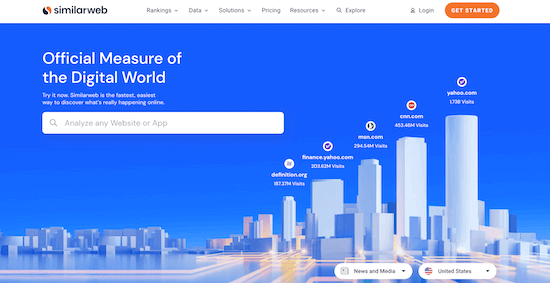
SimilarWeb is an online website traffic checker that gives you an overview of your competitor’s traffic and which channels are the most valuable.

Instead of just providing traffic from search, you’ll get detailed reports of a website’s entire traffic strategy.

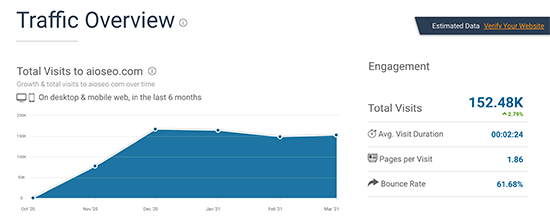
Once you run a website through the tool, you’ll get a breakdown of the overall traffic, including a country by country report.

SimilarWeb Traffic Overview Screenshot

You’ll get engagement metrics like bounce rate, number of pages viewed per visit, average visit duration, and the top traffic sources for that website.

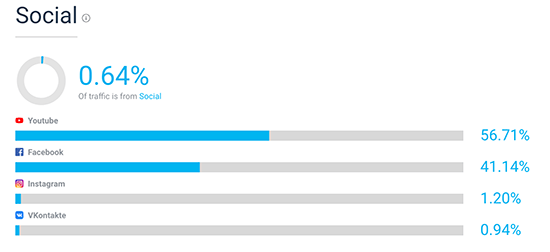
Beyond organic search traffic, you’ll find what paid keywords bring the website traffic, what social channels are the most valuable, and the display networks the site uses to monetize.

SimilarWeb Social Media Overview

Finally, you’ll get a detailed breakdown of the site’s audience, what kind of other sites they’re interested in, the top referring sites, and a list of competitor sites for you to research further.

The free version of the tool provides you with useful traffic data. If you require more detailed reports, then you can create an enterprise account with custom pricing.

3. Google Search Console

Google Search Console

Google Search Console is a free tool from Google that lets you analyze your search engine traffic.

This tool gives you a complete picture of how your site is viewed by the search engines.

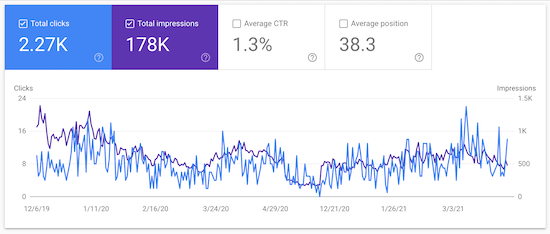
Google Search Console website traffic data

It shows the number of impressions, clicks, click-through rate (CTR), and the average position of your keywords in the search engines.

This helps you understand what keywords you’re ranking for and the search volume they’re bringing in. This information can help you improve your traffic.

For example, if you find that you’re ranking in position 11, then you can optimize the blog post to try to move it to the first page of the search results.

You can also see which pages are indexed, if any errors are present, and more.

Once you add your site to Google Search Console, you can start viewing your website data.

The easiest way is to connect your Google Search Console account with All in One SEO. For more details, see our guide on how to add your WordPress site to Google Search Console.

You can also use the MonsterInsights tool, mentioned below, to view your keyword rankings inside the WordPress admin area using Google Search Console data.

For more details, see our guide on how to see keywords people use to find your WordPress site.

4. Ubersuggest

Ubersuggest

Ubersuggest is a free and premium tool from Neil Patel that offers a ton of useful website traffic data.

It’s straightforward to use and the interface is built for beginners. If you’ve never done keyword research or traffic analysis before, then this tool makes it incredibly simple.

The traffic analyzer feature gives you a detailed breakdown of your competitor’s traffic over time, the keywords bringing them the most traffic, and the most popular pages on the site.

All you have to do is enter the website URL you want to analyze and click ‘Search’.

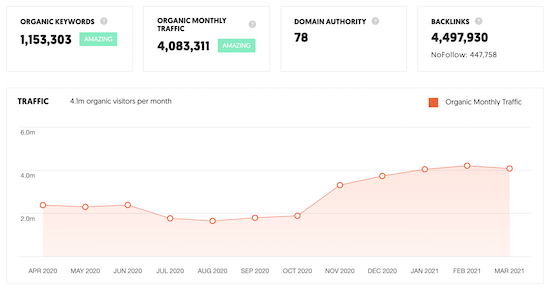
Ubersuggest traffic overview

The ‘Traffic Overview’ page gives you the total number of organic keywords the site ranks for, the organic monthly traffic, domain authority, and the total number of backlinks.

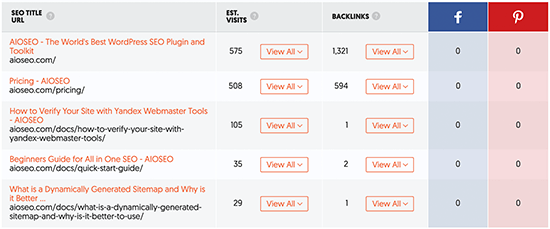
You can also dive deeper into each section of the traffic report. For example, you can expand the ‘Top Pages’ results to get a breakdown of each published page on the site and the estimated amount of traffic it brings in every month.

UberSuggest Top Pages

The results also give you the estimated number of backlinks, along with the number of Facebook and Pinterest shares. This data gives you a general overview of what you’ll have to do to outrank that page in the SERPs.

The free version of the tool gives you access to the last 3 months of data. Premium plans start at $29 per month, making it one of the cheapest tools on this list.

5. Serpstat

SERPStat

Serpstat offers a wide range of different SEO tools. What started as a simple keyword research tool has grown into an all-in-one website analysis tool.

Even though it’s packed with features, it’s still very easy to use. Just enter the URL and the tool will generate a traffic report.

There are traffic checking features along with backlink analysis, site auditing, and rank tracking tools.

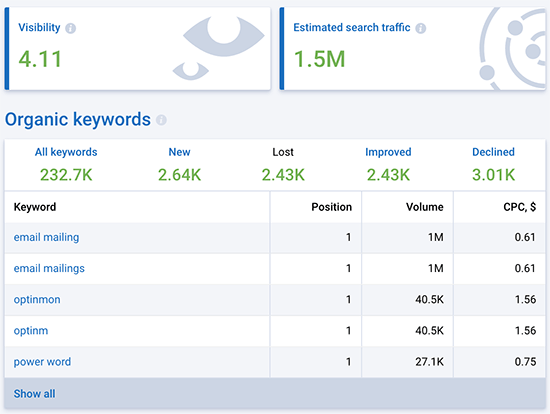
The traffic analysis features give you all kinds of useful website data, including the organic and paid keywords that are driving traffic, the average number of visitors the site gets per month, and the pages that get the most traffic.

Serpstat Keyword Preview

You’ll also find trend information, so you can see how the site’s rankings, traffic, and keywords are performing over time.

The free version of the tool gives you access to a portion of the total data that’s available for a domain name. Premium plans start at $69 per month and give you access to all of the data the tool provides.

6. Ahrefs

Ahrefs

Ahrefs is one of the most popular SEO tools in the market trusted by brands like Netflix, Uber, and Facebook. It helps you see how much traffic your competition is getting and why they’re ranking so high.

Ahrefs crawls more than 6 billion web pages every day, with more than 200 million websites in their index. It’s a lot of data, but this gives you actionable insights to help you outrank your competitors and get more traffic.

The interface is very simple and user friendly. Simply enter the website URL in the search field and the tool will pull all available website information.

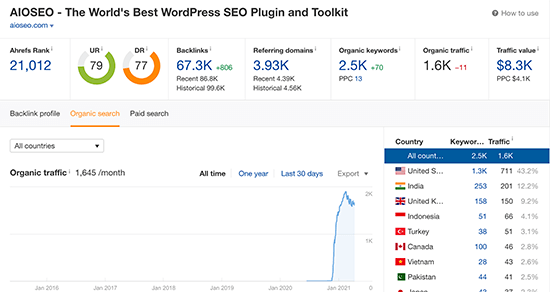
The search overview report gives you an overview of the organic search traffic a site receives, the domain authority, biggest competitors, and much more.

Ahrefs Traffic Stats

You can filter the report to view the traffic stats for the year, last 30 days, or all time.

Even though there’s a ton of data present, it’s easy to filter and find the website metrics you’re looking for.

Keep in mind that the traffic data only shows organic search data and not other sources like social media.

There’s a 7 day trial for $7, after that plans start at $99 per month. Considering the amount of data you have access to, it’s surprisingly affordable.

7. MonsterInsights

MonsterInsights

If you want to analyze your own traffic, then the only tool you should be using is Google Analytics. However, setting up Google Analytics on your own and analyzing your own data can be difficult.

We recommend using MonsterInsights, it’s the best Google Analytics plugin for WordPress and used by over 3 million sites, including Microsoft, Yelp, PlayStation, and more.

It allows you to easily set up Google Analytics in WordPress and view your traffic data directly in your WordPress dashboard.

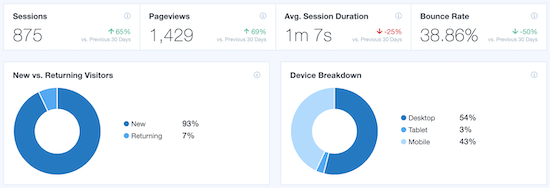
MonsterInsights website statistics

You’ll be able to see your top performing posts, pages, landing pages, homepage traffic, and more. This helps you understand user behavior and makes it much easier to grow your WordPress blog.